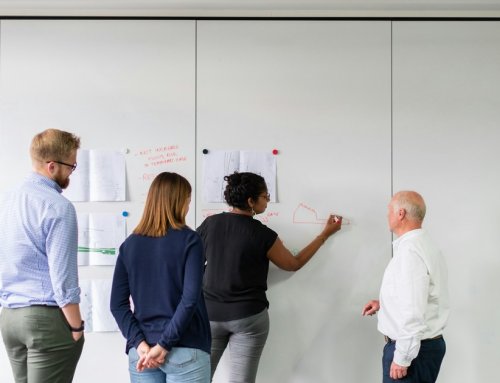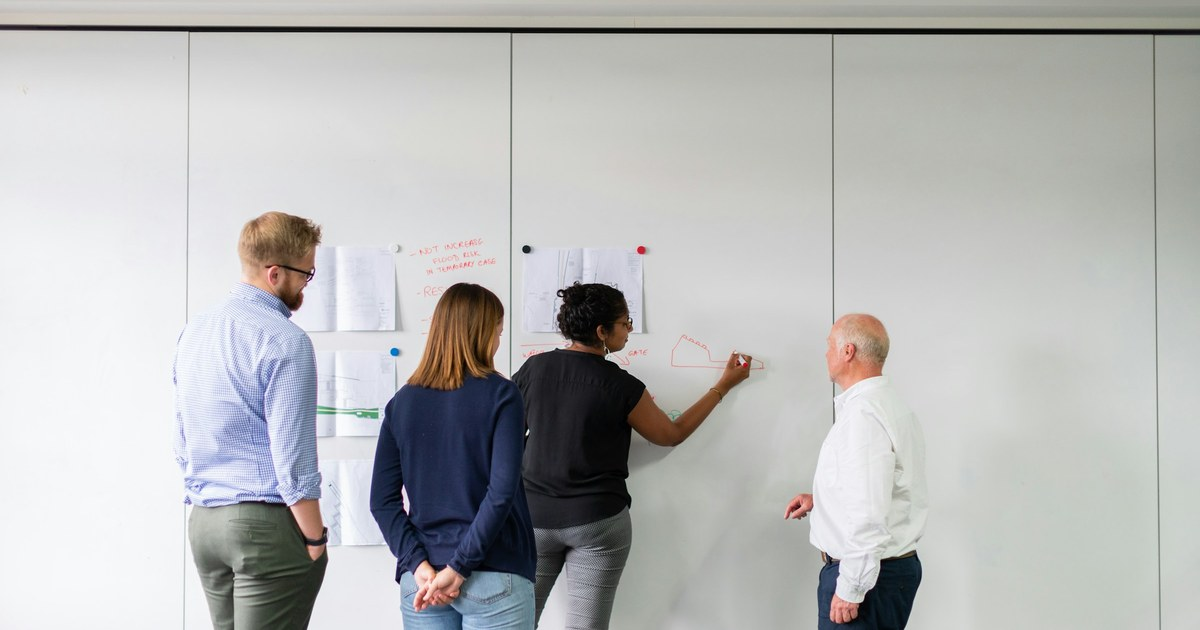


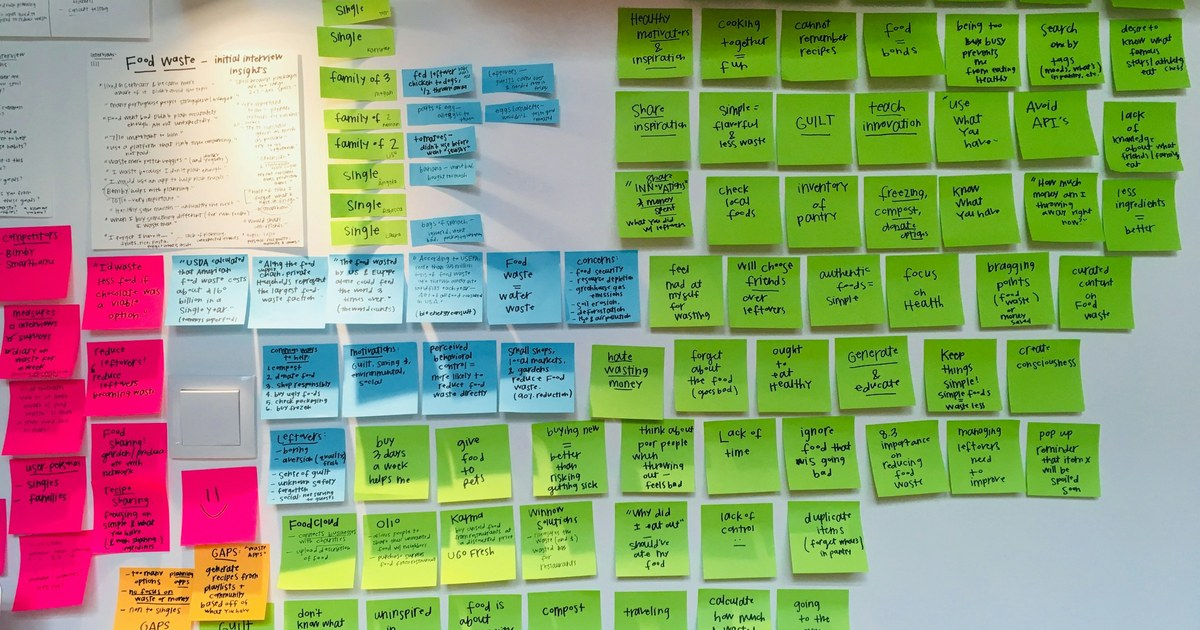
Three years ago, I sat in a boardroom in Kuala Lumpur watching a furniture manufacturer’s leadership team argue about why their new product line had flopped. Everyone had an opinion. The marketing director blamed pricing. The operations head blamed logistics. The CEO blamed the sales team. Nobody had spoken to a single customer. That afternoon, I ran them through a condensed design thinking workshop — three hours, no consultants required after I left, just sticky notes, a whiteboard, and a willingness to listen. Within ninety minutes, they had uncovered that their customers didn’t want cheaper furniture; they wanted modular pieces that could adapt to smaller urban apartments. That insight, which had been hiding in plain sight in their complaint logs, went on to drive a product refresh that boosted revenue by 22% the following quarter.
Design thinking is not some rarefied discipline reserved for Silicon Valley startups or global consultancies with eye-watering day rates. It is a structured way of solving problems that puts the human being — your customer, your employee, your end user — at the centre of every decision. And the beautiful thing is that you do not need a week-long retreat or a six-figure budget to use it. You need three hours, the right framework, and the courage to challenge your own assumptions.
I have consulted for SMEs across Southeast Asia — from Vietnamese fintech startups to Singaporean logistics firms to family-run manufacturers in Johor — and the pattern is remarkably consistent. The businesses that thrive are not necessarily the ones with the biggest budgets or the flashiest technology. They are the ones that systematically listen to their customers and translate those insights into action. Design thinking is the bridge between listening and doing, and it is a bridge that any business can build.
Why SMEs Struggle
The biggest barrier I see is the assumption that innovation requires massive investment. SME leaders often tell me they cannot afford to innovate, which is a bit like saying they cannot afford to breathe. Innovation is not optional — it is the oxygen that keeps businesses alive in competitive markets. The problem is not resources; it is mindset. Many SMEs are so consumed by daily operations that they never create space to step back and think differently about their products, services, or processes.
Another common mistake is confusing design thinking with brainstorming. Brainstorming is one small piece of the puzzle. Design thinking is a disciplined process that moves from empathy to definition to ideation to prototyping to testing. Skip any of those steps and you end up with solutions that sound clever in a meeting room but collapse on contact with reality. I have seen businesses spend months building features nobody asked for because they jumped straight from problem to solution without pausing to truly understand the customer’s world.
Finally, many SMEs treat workshops as one-off events rather than the beginning of a continuous practice. A single design thinking session can be transformative, but its real power emerges when the methodology becomes embedded in how your team approaches every challenge, every product decision, every customer interaction.
Step-by-Step Roadmap
Step 1: Set the Stage (15 Minutes)
Before anyone picks up a sticky note, you need to frame the challenge clearly. Write a single problem statement on the whiteboard — something like ‘How might we reduce customer churn in our subscription service?’ or ‘How might we make our onboarding process less confusing for first-time buyers?’ The ‘How might we’ format is deliberate: it is open enough to invite creative solutions but specific enough to keep the conversation focused. Invite six to ten people from different departments. Diversity of perspective is the engine of design thinking; if everyone in the room does the same job, you will get the same answers. I once ran a workshop for a Thai e-commerce company where the most valuable insight came from a warehouse packer who noticed that customers kept ordering the wrong sizes. That observation led to a simple size-guide pop-up that cut returns by 15%.
Step 2: Empathise (45 Minutes)
This is where most SMEs rush, and it is where the gold lies. Spend this time reviewing real customer data — support tickets, online reviews, survey responses, social media comments, even WhatsApp messages from your sales team. The goal is not to analyse data statistically but to feel the customer’s frustration, confusion, or delight. Have each participant read five to ten pieces of raw customer feedback aloud, then write down the emotions and unmet needs they detect. Pin these observations on the wall. In a workshop I facilitated for a Penang-based food delivery startup, the team discovered that their most frequent complaint was not about food quality or delivery speed — it was about the anxiety of not knowing when the rider would arrive. That emotional insight, invisible in their satisfaction scores, became the foundation of a real-time tracking feature that transformed their retention rates.
Step 3: Define the Core Problem (30 Minutes)
Now cluster the observations from the empathy phase. You will see patterns emerge — groups of related frustrations, recurring unmet needs, or surprising contradictions. Synthesise these into a refined problem statement that captures the real issue, not the surface symptom. This is where the discipline matters. I worked with a Singaporean co-working space operator who initially framed their problem as ‘We need more members.’ After the empathy exercise, the real problem turned out to be ‘Our existing members feel isolated and leave within three months.’ The solution was not more marketing spend but a community programme that increased retention by 30%. Your refined problem statement should be specific, human-centred, and actionable. Write it large on the wall. This is your North Star for the rest of the workshop.
Step 4: Ideate Freely (30 Minutes)
With the problem clearly defined, unleash your team’s creativity. Set a timer for ten minutes and have everyone write as many solutions as possible on individual sticky notes — one idea per note, no filtering, no judgement. Quantity matters more than quality at this stage. Then have each person present their ideas, grouping similar concepts together. Use dot voting to identify the top three to five ideas: give everyone three sticker dots and let them vote silently. This prevents the loudest voice in the room from dominating. I have found that SME teams in ASEAN often surprise themselves at this stage. A Malaysian HR software company I worked with generated 47 ideas in ten minutes. Their winning concept — a chatbot that answered employee leave-balance queries instantly — was suggested by a junior developer and went on to become their most popular feature.
Step 5: Prototype Rapidly (45 Minutes)
Take your top-voted idea and make it tangible. This does not mean building software or manufacturing a product. It means creating something a customer can react to — a paper sketch of a new app screen, a role-played service interaction, a storyboard showing the customer journey, or even a cardboard mock-up. The prototype should be rough enough that people feel comfortable criticising it. Perfection kills feedback. Split your group into two or three teams and have each build a different prototype of the same concept. This parallel approach often reveals aspects of the solution that a single team would miss. For the furniture manufacturer I mentioned earlier, the prototype was literally a cardboard box with movable dividers to demonstrate the modular concept. It cost nothing, took twenty minutes to build, and communicated the idea more powerfully than any slide deck ever could.
Step 6: Test and Iterate (15 Minutes Plus Follow-Up)
In the remaining workshop time, plan your testing approach. Identify five to ten real customers who can evaluate your prototype within the next week. Prepare three open-ended questions: What is your first reaction? What confuses you? What would make this better? Commit to a follow-up meeting within two weeks to review customer feedback and decide on next steps. The testing phase is where design thinking separates itself from wishful thinking. I consulted for a Jakarta-based education technology company that prototyped three different onboarding flows. Customer testing revealed that the team’s favourite version — the one with the most features — actually confused users the most. The simplest version, which the team had almost dismissed as too basic, scored highest on clarity and trust. Without testing, they would have built the wrong thing. The two-week follow-up is non-negotiable; without it, workshop energy evaporates and nothing changes.
Before and After: A Real Example
Consider the case of a family-owned textile business in Bandung, Indonesia, that had been operating for over three decades. They produced high-quality batik fabrics and sold primarily through traditional wholesale channels — fabric markets and a small network of retailers across Java. Revenue had been flat for five years, and younger competitors with Instagram-savvy marketing were eating into their market share. The founder’s son, who had recently joined the business, was pushing for a complete digital overhaul, while the founder herself was reluctant to abandon the relationships and reputation that had sustained the business for decades.
I facilitated a three-hour design thinking workshop with their team of eight, including the founder, her son, two production staff, a retail partner, and three regular customers they invited to participate. The empathy phase revealed something neither generation had expected: customers loved the quality of the batik but found the ordering process exhausting. They wanted to see the fabrics before buying but could not always visit the market. They also wanted smaller quantities for personal sewing projects, not the bulk rolls designed for retailers. The team prototyped a WhatsApp catalogue system where customers could browse fabric photos, request video close-ups of textures, and order cuts as small as one metre for home delivery.
Within three months of launching the WhatsApp catalogue, the business had acquired 400 new direct-to-consumer customers, increased margins by cutting out wholesale intermediaries for small orders, and — crucially — strengthened their wholesale relationships by positioning the direct channel as complementary rather than competitive. Revenue grew 18% in the first six months, and the founder told me it was the first time in years she felt genuinely excited about the business’s future. The total cost of the workshop and the WhatsApp catalogue setup was under RM 2,000.
Quick Wins to Start Today
Win 1: Read Ten Customer Complaints Before Your Next Meeting
Pull up your most recent support tickets, Google reviews, or social media comments and read ten of them with fresh eyes. Do not look for patterns yet — just notice the emotions. Are customers frustrated, confused, disappointed, or something else entirely? Share what you find with your team. This ten-minute exercise often surfaces insights that months of dashboard-gazing miss.
Win 2: Run a ‘How Might We’ Session Over Lunch
Pick one nagging business problem, frame it as a ‘How might we’ question, and spend thirty minutes over lunch generating ideas with three or four colleagues from different departments. No laptops, no slides — just sticky notes and a willingness to think differently. You will be surprised by what emerges when you give people permission to be creative without the pressure of a formal meeting.
Win 3: Prototype One Idea on Paper This Week
Take the best idea from your lunch session and sketch it on paper. It could be a new feature, a revised process, a different way of packaging your service — anything. Show it to three customers and ask for their honest reaction. This cycle of ideate-prototype-test is the heartbeat of design thinking, and it costs nothing but time and curiosity.
Key Takeaway
Design thinking is not a luxury for large corporations — it is a survival skill for SMEs competing in fast-moving ASEAN markets. Three hours, a clear problem statement, and the willingness to listen to your customers can unlock insights that transform your products, your processes, and your bottom line.
If you want a guided introduction to design thinking tailored for SMEs, explore the Design Thinking Fundamentals workshop at Being Specific. We will help you build the skills to run these sessions independently, again and again. Visit being-specific.com/contact to start the conversation.
Ready to Transform Your Business?
If your team has a real problem worth solving and a wall worth covering in sticky notes, design thinking is closer than you think. Our Design Thinking Fundamentals workshop at Being Specific gives SME leaders a hands-on facilitation experience using their own challenges, with structured frameworks and live coaching from facilitators who have run hundreds of workshops across ASEAN. Visit being-specific.com/contact to learn more and reserve your place.