


Every business I have ever worked with has a hidden tax. It is not on any invoice or balance sheet, but it is real, it is substantial, and it is quietly eroding profitability every single day. This hidden tax consists of the unnecessary steps, redundant approvals, manual workarounds, and legacy processes that your team performs out of habit rather than necessity. They exist because ‘that is how we have always done it,’ and they persist because nobody has taken the time to question whether they still make sense.
I was consulting for a mid-sized Malaysian food and beverage distributor a couple of years ago, and the operations manager was convinced that their biggest cost problem was logistics — fuel, vehicle maintenance, driver overtime. When I asked to see the full order-to-delivery workflow, it took us four hours just to map it. The process involved seventeen handoffs between five departments, three separate data entry points for the same order information, and a paper-based approval loop that added two days to every delivery. When we calculated the cost of those inefficiencies — the staff time, the delays, the errors that caused returns and re-deliveries — it came to approximately RM 35,000 per month. That was their hidden tax. Not logistics. Not fuel. Just friction in the process.
Process redesign is not glamorous work. It does not involve cutting-edge technology or visionary strategy. It involves rolling up your sleeves, walking the floor, tracing how work actually flows through your organisation, and having the honesty to admit that many of your processes are relics of a different era. But the returns are extraordinary. In my experience, most ASEAN SMEs can recover 15-25% of operational efficiency simply by eliminating unnecessary steps, reducing handoffs, and automating repetitive tasks. That is not a marginal improvement — it is a competitive advantage.
Why SMEs Struggle
The first reason is that process inefficiency is invisible to the people inside it. When you have been following the same workflow for years, it feels normal. The unnecessary approval step, the redundant data entry, the manual reconciliation — they are just ‘how things work.’ It takes an outsider’s perspective, or a deliberate effort to see with fresh eyes, to recognise these inefficiencies for what they are. I call this ‘process blindness,’ and it affects every organisation regardless of size or industry.
The second challenge is that process redesign requires cross-functional collaboration, which is something many SMEs find difficult. Most operational processes span multiple departments — sales, operations, finance, logistics — but each department only sees their piece of the process. The salesperson who enters an order does not know about the three re-entry steps it triggers downstream. The finance team who processes invoices does not know about the delivery delays caused by their approval workflow. Redesigning a process end-to-end requires getting all these stakeholders in the same room, which can be politically uncomfortable.
The third barrier is the fear that simplifying processes means cutting jobs. This fear is usually unfounded but deeply felt, and it can generate fierce resistance. In reality, process redesign typically frees people from tedious, low-value tasks so they can focus on higher-value work. But that message needs to be communicated clearly, consistently, and credibly before the redesign begins.
Step-by-Step Roadmap
Step 1: Map Your Current Process End-to-End
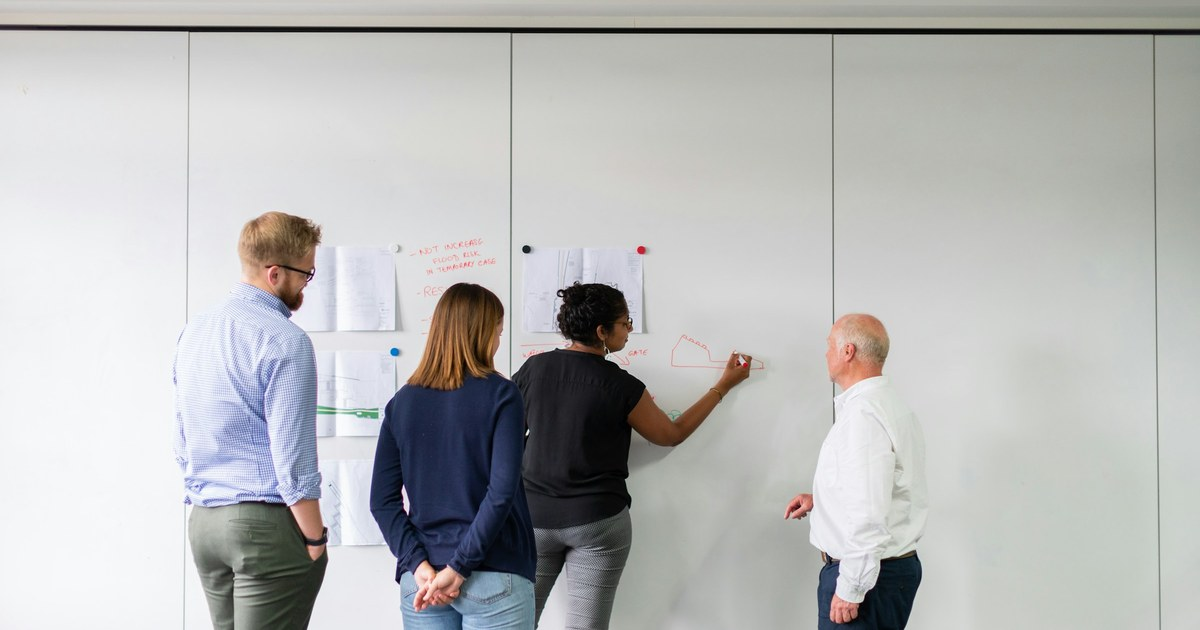
Select the process that has the most impact on your customer experience or operational cost — typically your order-to-delivery process, your customer onboarding process, or your procurement-to-payment process. Gather representatives from every department involved and map the process from trigger to completion on a whiteboard or large sheet of paper. Document every step, every handoff, every decision point, every approval, and every system used. The critical rule is to map how the process actually works, not how it is supposed to work. There is always a gap between the documented procedure and the reality on the ground. For the F&B distributor, the ‘official’ process had nine steps. The actual process, when we mapped it with the people who did the work every day, had seventeen — including several informal workarounds that staff had developed to compensate for gaps in the official process. One warehouse supervisor had been maintaining a personal notebook to track orders that the system lost during handoffs. That notebook was both a symptom of the broken process and a testament to the team’s dedication.
Step 2: Identify Every Hidden Tax
With your current-state process map on the wall, go through it step by step and classify each one into three categories: value-adding (the customer would pay for this), necessary but non-value-adding (required for compliance, quality, or risk management but not directly valued by the customer), and waste (adds no value and could be eliminated). Typical waste categories include: duplicate data entry, unnecessary approvals, waiting time between steps, unnecessary movement of people or materials, rework caused by errors upstream, and over-processing (doing more than the customer requires). For each waste item, estimate the time and cost involved. The F&B distributor’s hidden taxes included: triple data entry of order information (15 minutes per order × 80 orders per day = 20 staff hours per day), a two-level approval process for orders under RM 500 that added two days of delay (originally designed for quality control but now just a bottleneck), and manual reconciliation of delivery records against invoices that consumed an entire staff member’s time every Friday. Quantifying these wastes creates the business case for change and helps prioritise which waste to tackle first.
Step 3: Redesign for Flow, Not for Departments
Most processes are designed around departmental boundaries — sales does their part, then passes to operations, who pass to logistics, who pass to finance. Each handoff introduces delay, miscommunication, and the potential for error. The redesign principle is to optimise the end-to-end flow, even if that means changing departmental responsibilities. Ask: how would we design this process if we were starting from scratch, with no existing departmental structure to constrain us? Then work backwards to a practical implementation that minimises handoffs and keeps information flowing smoothly. For a Singaporean events management company, we reduced the event booking process from eleven steps across four departments to six steps with two handoffs. The key change was giving the front-office team access to real-time availability and pricing information that previously required a request to the operations team — eliminating a two-day handoff that caused 30% of quote-stage client drop-offs. The redesigned process was faster for the team and dramatically better for the customer, who could now receive a confirmed quote in hours rather than days.
Step 4: Eliminate, Automate, Then Optimise
Apply this hierarchy to every non-value-adding step in your process. First, can it be eliminated entirely? Many approval steps, reconciliation processes, and reporting requirements were created for reasons that no longer exist. Challenge every step with ‘Why do we do this?’ and ‘What would happen if we stopped?’ If the answer is ‘nothing,’ eliminate it. Second, for necessary steps that cannot be eliminated, can they be automated? Data entry, notification sending, report generation, and simple decision routing can almost always be automated using affordable tools. Third, for steps that must remain manual, can they be optimised — made faster, simpler, or less error-prone? The F&B distributor applied this hierarchy and eliminated four steps entirely (including two approval loops), automated three others (order entry now flows directly from sales to the warehouse system, invoices are generated automatically from delivery confirmations, and customers receive automated dispatch notifications), and optimised the remaining steps by creating standardised templates and checklists. The seventeen-step process became a nine-step process, with five of those nine steps fully automated.
Step 5: Implement With a Parallel Run
Do not switch from the old process to the new one overnight. Run both processes in parallel for two to four weeks to catch issues, build confidence, and give your team time to adapt. During the parallel run, track error rates, processing times, and staff feedback for both the old and new processes. This data provides objective evidence of improvement (or highlights areas that need adjustment) and gives the team a fair comparison. The parallel run also serves as a safety net — if something goes wrong with the new process, the old one is still there. For the F&B distributor, we ran the old and new order processes in parallel for three weeks. In the first week, the new process surfaced two edge cases that the redesign had not accounted for (urgent orders and partial deliveries), which we quickly addressed. By week three, the new process was handling 100% of orders without issues, and the team was so comfortable with it that they asked to stop the parallel run early. The parallel approach adds short-term overhead but dramatically reduces the risk of a disruptive transition. It also builds the trust that makes the team willing to embrace the change.
Step 6: Measure Impact and Sustain Improvements
After the new process is live, measure its impact against your pre-redesign baseline. Compare processing times, error rates, cost per transaction, and customer satisfaction metrics. Share these results widely — the team that did the hard work of changing their habits deserves to see the evidence that it was worth it. Then, and this is the part most businesses skip, put in place mechanisms to sustain the improvement. Process drift — the gradual return to old habits and workarounds — is a real and constant threat. Schedule quarterly process reviews, assign a process owner who is accountable for maintaining standards, and create a simple feedback channel where team members can flag emerging inefficiencies. The F&B distributor appointed their most detail-oriented operations supervisor as process owner and scheduled quarterly reviews. Six months after the redesign, their order-to-delivery time had dropped from five days to two, errors had decreased by 70%, and the RM 35,000 monthly hidden tax had been reduced to approximately RM 8,000. The operations manager who had originally blamed logistics told me: ‘I cannot believe we worked that way for so long.’
Before and After: A Real Example
A mid-sized garment manufacturer in Ho Chi Minh City, Vietnam, producing private-label clothing for regional retail chains was facing a recurring nightmare: missed delivery deadlines. They were hitting their promised delivery dates only about 65% of the time, which was causing penalties from retail clients, damaging relationships, and threatening contract renewals. The management team assumed the problem was production capacity and was considering a significant capital investment in additional machinery and staff.
When we mapped their end-to-end process from customer order to final delivery, a different picture emerged. The production floor was actually running at only 72% capacity utilisation. The delays were not in manufacturing — they were in the pre-production process. Each new order required fabric sourcing, sample approval, and production scheduling, which involved a complex dance between the sales team (who negotiated with clients), the design team (who created technical specifications), the procurement team (who sourced materials), and the production planning team (who scheduled machine time). The average elapsed time from order confirmation to production start was eighteen days — during which the actual work being done totalled about twelve hours. The remaining seventeen-plus days were waiting: waiting for approvals, waiting for information, waiting for someone to pass the folder to the next desk.
We redesigned the pre-production process around three principles: eliminate sequential handoffs by running tasks in parallel where possible, replace paper-based routing with a shared digital workflow board (using Monday.com at USD 10 per user per month), and give the production planning team real-time visibility into incoming orders rather than waiting for a weekly batch update. The redesigned process reduced pre-production elapsed time from eighteen days to six days. On-time delivery rates climbed from 65% to 91% within four months. The capital investment in additional machinery became unnecessary because the existing capacity was now being utilised effectively. The total cost of the process redesign — consulting time, software subscriptions, and team training — was approximately USD 5,000. The cost of the machinery investment they avoided was USD 200,000. More importantly, two retail clients who had been considering alternative suppliers renewed their contracts with increased order volumes, representing approximately USD 150,000 in annual revenue preserved.
Quick Wins to Start Today
Win 1: Time Your Most Important Process
Pick the process that most directly affects your customers or your costs — order processing, customer onboarding, invoice approval — and time it from start to finish. Not the ‘should take’ time, but the actual elapsed time including all waiting, approvals, and handoffs. The gap between the work time and the elapsed time is your hidden tax. Just measuring it creates awareness that often triggers improvement.
Win 2: Ask ‘Why Do We Do This?’ About One Step
Choose one step in any process that feels like it has always been there and ask why. Trace it back to its origin. Was it created for a reason that still exists? If the answer is ‘I do not know’ or ‘It made sense five years ago,’ you have found a candidate for elimination. Removing one unnecessary step can save hours per week when multiplied across all the transactions that pass through it.
Win 3: Eliminate One Handoff by Sharing Information
Identify one point where a process stalls because someone is waiting for information from another person or department. Give them direct access to that information — a shared spreadsheet, a dashboard, or even just being copied on relevant emails. Eliminating a single information handoff often accelerates an entire process by a day or more.
Key Takeaway
The hidden tax in your operations — the unnecessary steps, redundant handoffs, and legacy approvals — is likely costing you far more than you realise. Process redesign is not glamorous, but it is one of the highest-return investments any SME can make. Map it, quantify it, redesign it, and sustain it.
If you are ready to uncover and eliminate the hidden taxes in your operations, explore the 3-Phase Transformation System and the SME Digital Transformation Bootcamp at Being Specific. We help businesses see their processes clearly and redesign them for speed, efficiency, and customer satisfaction. Visit being-specific.com/contact to start the conversation.
Ready to Transform Your Business?
Process redesign is one of the highest-return investments most SMEs never plan for. Our SME Digital Transformation Bootcamp at Being Specific helps leadership teams identify, redesign and embed the operational improvements that quietly compound into significant margin gains. Visit being-specific.com/contact to learn more.